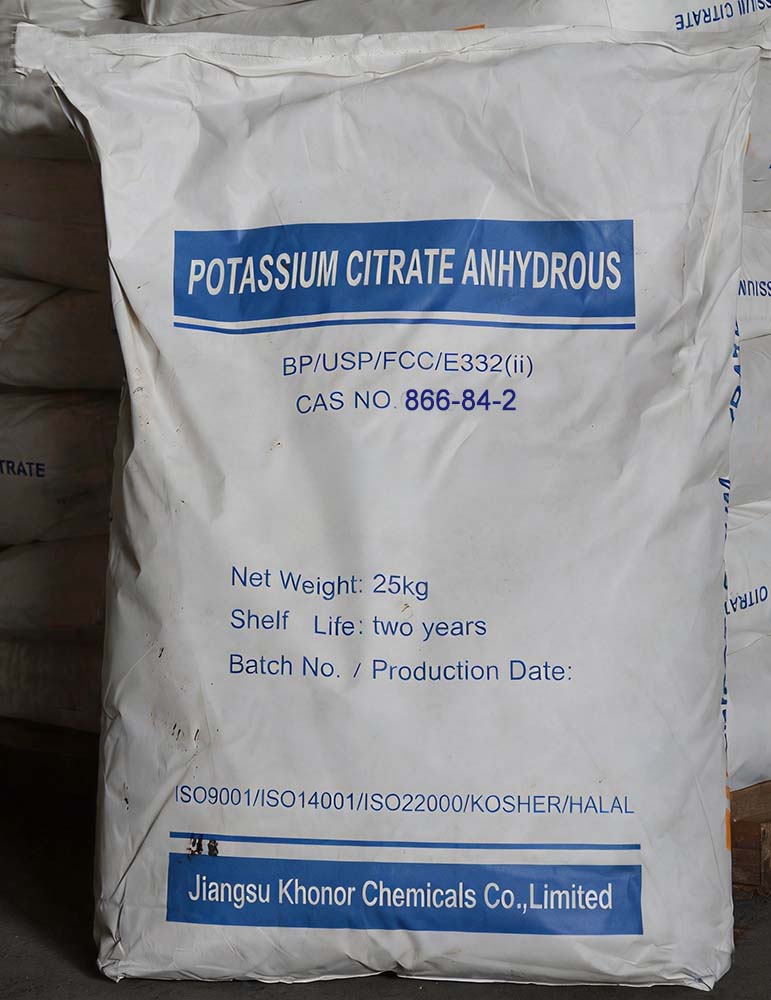
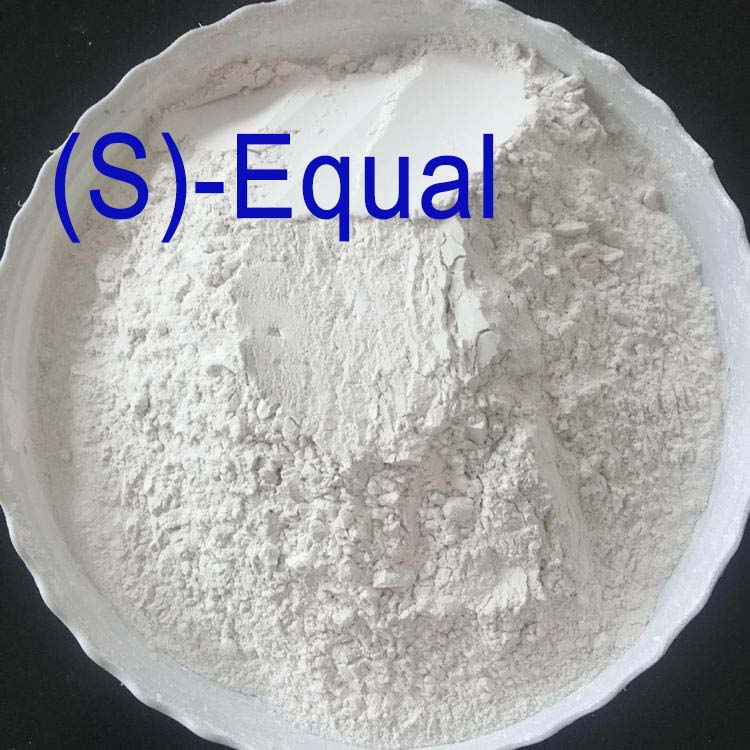
Potassium Citrate Anhydrous vs Potassium Citrate Monohydrate
Key Advantages and Industrial Differences
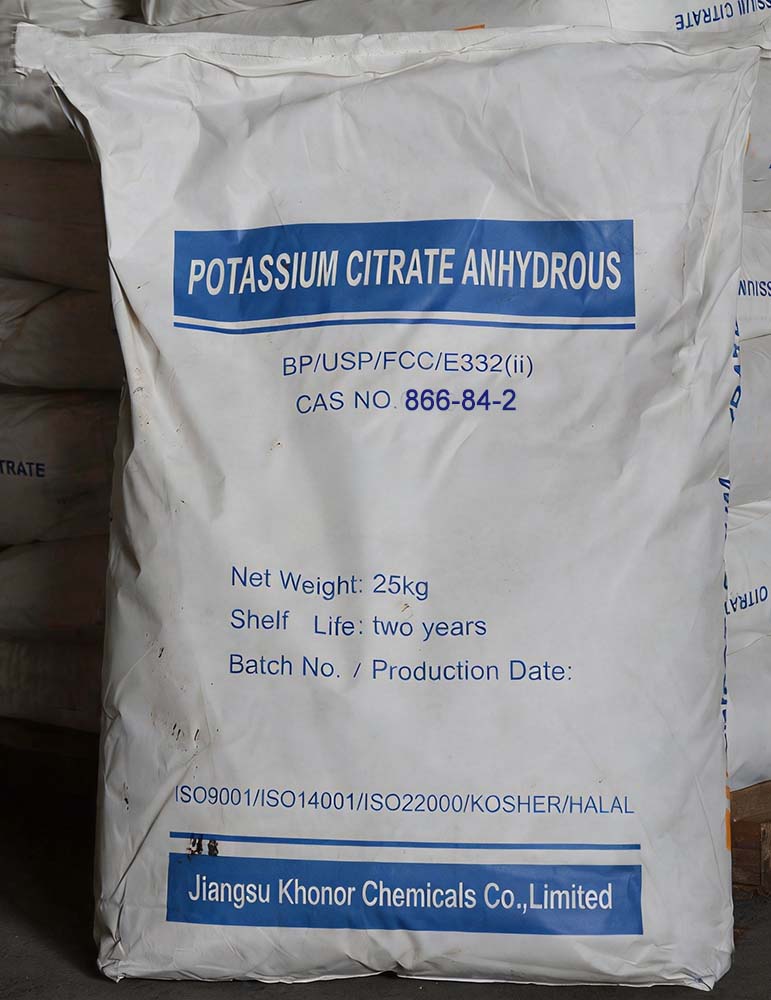
Potassium Citrate is widely used in food, pharmaceutical, and nutraceutical industries as an acidity regulator, buffering agent, and potassium source. It is mainly available in two forms: Potassium Citrate Monohydrate and Potassium Citrate Anhydrous (E332(ii)). While both share similar chemical functionality, the anhydrous grade offers significant technical and processing advantages in modern industrial applications.
1. What is Potassium Citrate Monohydrate?
Potassium Citrate Monohydrate contains one molecule of crystallization water in its structure. It is the most commonly used form in the global market due to its stable production process and lower cost.
Key characteristics:
Contains crystal water
Slightly higher moisture content
Widely used in standard food formulations
Good solubility and buffering performance
2. What is Potassium Citrate Anhydrous?
Potassium Citrate Anhydrous is a dehydrated form of tripotassium citrate with very low moisture content (typically ≤1.0%). It contains no crystallization water, resulting in higher active substance concentration and improved physical stability.
Key characteristics:
3. Key Advantages of Potassium Citrate Anhydrous
3.1 Higher Active Ingredient Content
Because no crystallization water is present, Potassium Citrate Anhydrous provides a higher concentration of active potassium citrate per unit weight. This improves formulation efficiency and reduces dosage variability.
3.2 Lower Moisture & Better Stability
With ultra-low moisture content (≤1.0%), the anhydrous form significantly reduces the risk of:
This makes it ideal for long-term storage and export logistics.
3.3 Improved Flowability and Processing Performance
Potassium Citrate Anhydrous has superior powder characteristics:
Better flowability in automatic dosing systems
Easier blending with other powder ingredients
More stable performance in high-speed production lines
This is particularly important for tablet manufacturing, instant beverage powders, and premix applications.
3.4 Better Suitability for Moisture-Sensitive Formulations
In pharmaceutical and nutraceutical applications, moisture can negatively affect stability. The anhydrous grade provides:
Lower risk of hydrolysis or degradation
Improved compatibility with moisture-sensitive actives
Longer shelf life of final products
3.5 More Efficient Transportation and Storage
Due to lower moisture content:
Reduced weight variability during shipping
Lower risk of packaging damage
More stable product quality in different climates
This is especially beneficial for international trade and long-distance export.
4. Application Comparison
| Application Area | Monohydrate | Anhydrous |
|---|
| Beverages | Widely used | Preferred for instant powders |
| Pharmaceuticals | Standard use | Preferred for sensitive formulations |
| Food processing | Common | High-end formulations |
| Nutritional supplements | Used | Increasing demand |
| Industrial use | Suitable | More stable performance |
5. Conclusion
Both Potassium Citrate Monohydrate and Potassium Citrate Anhydrous play important roles in the global market. However, the anhydrous form is increasingly preferred in high-performance applications due to its lower moisture content, higher active concentration, and superior processing stability.
As food and pharmaceutical formulations become more advanced, Potassium Citrate Anhydrous (E332(ii)) is expected to gain stronger demand, especially in export-oriented and moisture-sensitive industries.
Supplier Information
High-quality Potassium Citrate Anhydrous is supplied by experienced manufacturers in China, offering consistent quality, strict specification control, and global export support for food, pharmaceutical, and industrial applications.
 English

 Spain
Spain ruso
ruso Portuguese
 italiano
 Arabic
 French
 Korean
 German
 Turkish
 Vietnamese
 Indonesian
 Dutch
Dutch Polish
 Far
Far Thai
Thai



 0086-19851820538
  carlos@khonorchem.com
  Rm 1902 Easey Comm Bldg, 253-261, Hennessy RD Wanchai HK